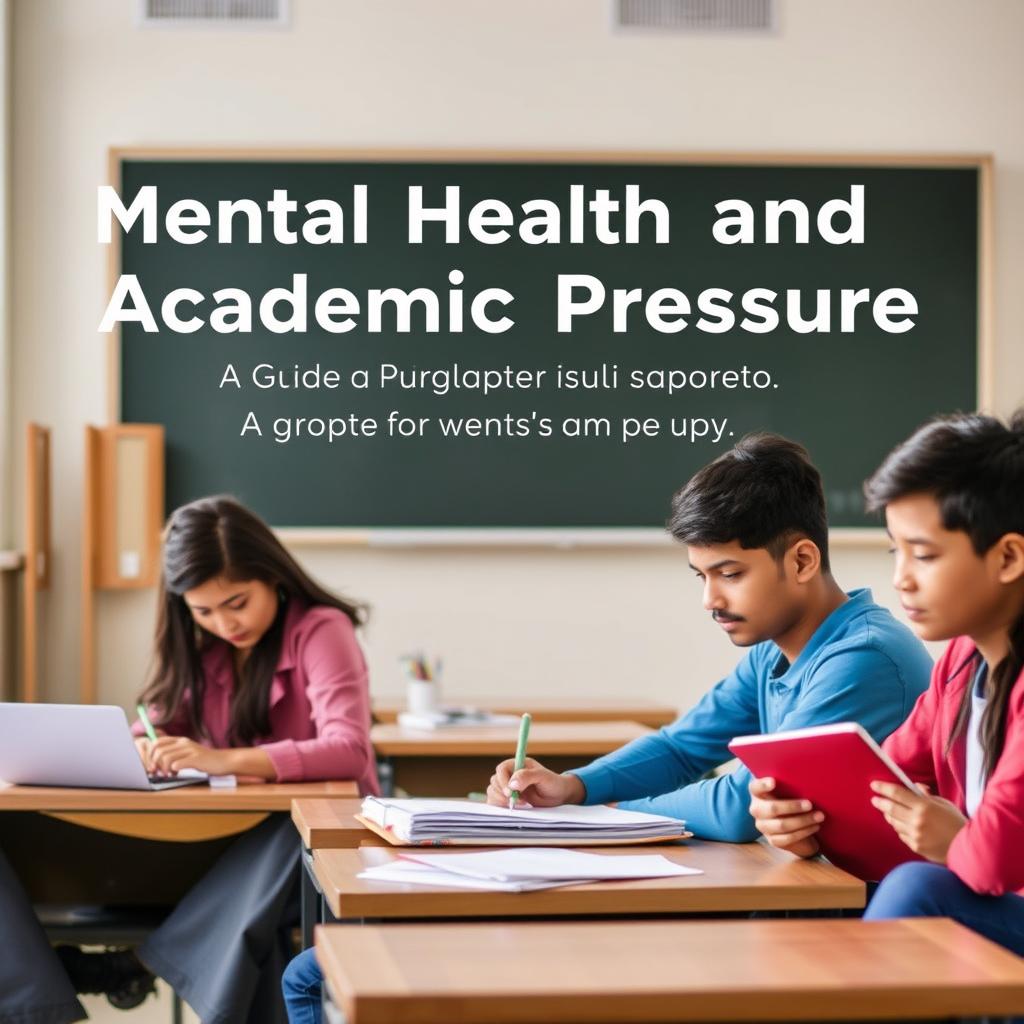
Mental Health and Academic Pressure: A Guide for Bangladeshi Students and Parents
April 30, 2026
|
mental-health
exam-stress
student-wellbeing
parenting
depression
anxiety
<h2>The Silent Crisis in Bangladeshi Education</h2>
<p>In 2024, the National Institute of Mental Health reported that 28% of Bangladeshi university students showed symptoms of clinical depression, and 18% experienced anxiety disorders severe enough to impair academic functioning. Among HSC and SSC students, the numbers are believed to be even higher during exam seasons, though comprehensive studies are limited. Behind every statistic is a human being — a 16-year-old who can't sleep before board exams, a university student who hasn't left their hostel room in three days, a coaching center student who cries every night but tells no one. Mental health in Bangladeshi education is a crisis hiding in plain sight, obscured by cultural stigma and a collective belief that academic pressure is simply the price of success.</p>
<h2>Understanding the Sources of Pressure</h2>
<h3>Family Expectations</h3>
<p>In Bangladeshi culture, children's academic achievement is deeply intertwined with family honor. A child's GPA is discussed at family gatherings, compared with cousins' results, and treated as a measure of parenting success. Phrases like "পড়ালেখা না করলে জীবনে কিছু হবে না" (Without studies, nothing will happen in life) and "তোমার চাচাতো ভাই GPA 5 পেয়েছে, তুমি কেন পারো না?" (Your cousin got GPA 5, why can't you?) are heard in millions of households. This pressure comes from love — parents genuinely believe academic success is the only reliable path to economic security in a country where formal employment is scarce and social safety nets are minimal.</p>
<p>But love expressed as relentless pressure causes real psychological harm. Students internalize the message that their worth as human beings is conditional on academic performance. When they inevitably encounter failure or difficulty, they experience not just disappointment but an existential crisis: if I can't get the grades, I am worthless. This cognitive distortion is the foundation of academic depression.</p>
<h3>The Coaching Center Pressure Cooker</h3>
<p>Bangladesh's shadow education system — the vast network of private coaching centers — intensifies academic pressure to extreme levels. Major coaching centers like Udvash, Unmesh, and Mentors publish student rankings after every model test. Some display top-scorers' names and photos on walls while posting 'improvement needed' lists. Weekly rankings create a constant sense of competition and inadequacy. Students attend 4-6 hours of coaching daily on top of 6 hours of school, leaving minimal time for rest, recreation, or social connection. The total weekly study+coaching hours for many HSC students exceeds the legal working hours for adults.</p>
<h3>Social Media Comparison</h3>
<p>Social media has introduced a new dimension of academic pressure. Facebook and YouTube are filled with toppers sharing their study schedules ('I study 16 hours a day'), coaching center advertisements featuring success stories, and peers celebrating results. What students don't see: the anxiety behind the topper's smile, the five students who failed for every one who succeeded, or the carefully curated nature of social media posts. This creates a distorted perception that everyone else is doing better, studying harder, and coping more easily.</p>
<h2>Recognizing Mental Health Warning Signs</h2>
<p>Mental health problems in students often manifest differently than in adults. Parents and teachers should watch for these signs:</p>
<p><strong>Behavioral changes:</strong> A previously social student becoming isolated. Declining school attendance or coaching center ditching. Sudden drop in grades despite continued study effort. Loss of interest in activities they previously enjoyed — sports, friends, hobbies. Excessive sleep or inability to sleep. Significant appetite changes.</p>
<p><strong>Emotional signs:</strong> Persistent sadness or irritability lasting more than two weeks. Expressing feelings of worthlessness or hopelessness ("কিছুতেই হবে না" — Nothing will work out). Excessive guilt about grades or performance. Crying spells without clear trigger. Anger outbursts disproportionate to the situation.</p>
<p><strong>Physical symptoms:</strong> Frequent headaches or stomachaches without medical cause (psychosomatic symptoms are common in stressed students). Fatigue despite adequate sleep. Difficulty concentrating that worsens over time. Panic attacks — sudden episodes of racing heart, shortness of breath, and overwhelming fear, often mistaken for heart problems.</p>
<p><strong>Dangerous signs requiring immediate attention:</strong> Expressing desire to die or disappear. Giving away possessions. Writing goodbye notes or messages. Self-harm (cutting, burning). Sudden calmness after prolonged depression (this can indicate a decision has been made). If you observe these signs, do not wait. Contact Kaan Pete Roi (কান পেতে রই) helpline: 01779-554391, or take the student to the nearest hospital emergency department.</p>
<h2>Practical Strategies for Students</h2>
<h3>Reframe the Narrative</h3>
<p>Your exam results do not define your worth as a person. This is not a motivational platitude — it is a factual statement. Bangladesh's most successful entrepreneurs, artists, and leaders include people who performed poorly in board exams. Fazle Hasan Abed (founder of BRAC, the world's largest NGO) was not a board exam topper. Your GPA is one data point in a life that will contain thousands of meaningful experiences, relationships, and achievements. Internalizing this truth doesn't make you complacent — it makes you resilient.</p>
<h3>Study Smarter, Not Just Longer</h3>
<p>The "16 hours a day" study culture is not only unsustainable — it's counterproductive. Cognitive science research consistently shows that after 4-5 hours of focused mental work, productivity drops sharply. The remaining hours produce diminishing returns while increasing stress and fatigue. Effective study involves active recall (testing yourself), spaced repetition (reviewing at increasing intervals), and interleaving (mixing subjects rather than marathoning one topic). These techniques achieve better retention in less time, leaving room for rest and recreation that actually improve performance.</p>
<h3>Maintain Physical Health</h3>
<p>The mind-body connection is not mystical — it's biological. Exercise releases endorphins and BDNF (brain-derived neurotrophic factor), which directly improve mood and cognitive function. Even a 20-minute brisk walk produces measurable effects. Sleep deprivation impairs memory consolidation — pulling all-nighters before exams literally prevents your brain from converting study into long-term memory. Aim for 7-8 hours of sleep, especially during exam season. Eat regular meals; the brain consumes 20% of your body's energy despite being only 2% of its weight.</p>
<h3>Build a Support Network</h3>
<p>Isolation amplifies mental health problems. Maintain friendships that include activities beyond studying — playing cricket, watching movies, having tea at the local stall. If you're struggling, tell someone: a friend, a teacher you trust, a family member who listens without judgment. If speaking face-to-face feels impossible, text the Kaan Pete Roi helpline or write in a journal. Externalizing difficult emotions — getting them outside your head — reduces their intensity.</p>
<h2>What Parents Can Do</h2>
<p><strong>Separate love from performance.</strong> Tell your child explicitly: "I love you regardless of your grades. Your worth to this family is not conditional." Say it regularly. Children who feel unconditionally valued perform better academically because they're freed from the anxiety of conditional acceptance.</p>
<p><strong>Stop comparing.</strong> Every child who hears "your cousin got GPA 5" hears "you are inadequate." Comparison never motivates — it only damages self-worth. Focus on your child's progress relative to their own past performance, not relative to other children.</p>
<p><strong>Reduce coaching center hours.</strong> If your child is in school 6 hours and coaching 4-5 hours daily, they are working 10-11 hour days with homework on top. No adult would accept this schedule for themselves. Quality study hours matter more than quantity. Discuss with your child whether coaching is helping or just adding stress.</p>
<p><strong>Normalize mental health conversations.</strong> In many Bangladeshi families, the phrase "মানসিক স্বাস্থ্য" (mental health) is never spoken. Break this silence. Ask your child how they're feeling — not about studies, about their emotional state. Listen without immediately problem-solving or dismissing. If they say they're stressed, don't say "Everyone is stressed, just study harder." Acknowledge their feelings first.</p>
<p><strong>Seek professional help when needed.</strong> Visiting a psychologist or counselor is not a sign of weakness or madness (পাগলামো). It's healthcare, no different from visiting a doctor for a physical ailment. The National Institute of Mental Health in Dhaka, university counseling centers, and private psychologists (fees range from ৳500-৳2,000 per session) provide professional support. Online therapy through platforms like Maya and Mind Tales is also available.</p>
<h2>What Schools and Institutions Can Do</h2>
<p>Schools and colleges have a responsibility to protect student wellbeing, not just academic outcomes. Practical steps: appoint trained school counselors (many Bangladeshi schools have none). Train teachers to recognize mental health warning signs. Eliminate public shaming practices — posting low scores publicly, calling out students in class for poor performance. Create safe spaces where students can decompress during the school day. Partner with organizations like BRAC, Kaan Pete Roi, or Naripokkho to provide mental health workshops.</p>
<h2>A Final Word</h2>
<p>Bangladesh needs educated, skilled young people to build its future. But it needs them alive, healthy, and whole — not broken by a system that treats them as examination machines. Academic success matters, but it is not the only thing that matters, and it is never worth a young person's mental health or life. If you're a student struggling right now: this phase will pass. The exam that feels like life or death today will be a footnote in your life story. Reach out for help. You deserve it.</p>
<p>In 2024, the National Institute of Mental Health reported that 28% of Bangladeshi university students showed symptoms of clinical depression, and 18% experienced anxiety disorders severe enough to impair academic functioning. Among HSC and SSC students, the numbers are believed to be even higher during exam seasons, though comprehensive studies are limited. Behind every statistic is a human being — a 16-year-old who can't sleep before board exams, a university student who hasn't left their hostel room in three days, a coaching center student who cries every night but tells no one. Mental health in Bangladeshi education is a crisis hiding in plain sight, obscured by cultural stigma and a collective belief that academic pressure is simply the price of success.</p>
<h2>Understanding the Sources of Pressure</h2>
<h3>Family Expectations</h3>
<p>In Bangladeshi culture, children's academic achievement is deeply intertwined with family honor. A child's GPA is discussed at family gatherings, compared with cousins' results, and treated as a measure of parenting success. Phrases like "পড়ালেখা না করলে জীবনে কিছু হবে না" (Without studies, nothing will happen in life) and "তোমার চাচাতো ভাই GPA 5 পেয়েছে, তুমি কেন পারো না?" (Your cousin got GPA 5, why can't you?) are heard in millions of households. This pressure comes from love — parents genuinely believe academic success is the only reliable path to economic security in a country where formal employment is scarce and social safety nets are minimal.</p>
<p>But love expressed as relentless pressure causes real psychological harm. Students internalize the message that their worth as human beings is conditional on academic performance. When they inevitably encounter failure or difficulty, they experience not just disappointment but an existential crisis: if I can't get the grades, I am worthless. This cognitive distortion is the foundation of academic depression.</p>
<h3>The Coaching Center Pressure Cooker</h3>
<p>Bangladesh's shadow education system — the vast network of private coaching centers — intensifies academic pressure to extreme levels. Major coaching centers like Udvash, Unmesh, and Mentors publish student rankings after every model test. Some display top-scorers' names and photos on walls while posting 'improvement needed' lists. Weekly rankings create a constant sense of competition and inadequacy. Students attend 4-6 hours of coaching daily on top of 6 hours of school, leaving minimal time for rest, recreation, or social connection. The total weekly study+coaching hours for many HSC students exceeds the legal working hours for adults.</p>
<h3>Social Media Comparison</h3>
<p>Social media has introduced a new dimension of academic pressure. Facebook and YouTube are filled with toppers sharing their study schedules ('I study 16 hours a day'), coaching center advertisements featuring success stories, and peers celebrating results. What students don't see: the anxiety behind the topper's smile, the five students who failed for every one who succeeded, or the carefully curated nature of social media posts. This creates a distorted perception that everyone else is doing better, studying harder, and coping more easily.</p>
<h2>Recognizing Mental Health Warning Signs</h2>
<p>Mental health problems in students often manifest differently than in adults. Parents and teachers should watch for these signs:</p>
<p><strong>Behavioral changes:</strong> A previously social student becoming isolated. Declining school attendance or coaching center ditching. Sudden drop in grades despite continued study effort. Loss of interest in activities they previously enjoyed — sports, friends, hobbies. Excessive sleep or inability to sleep. Significant appetite changes.</p>
<p><strong>Emotional signs:</strong> Persistent sadness or irritability lasting more than two weeks. Expressing feelings of worthlessness or hopelessness ("কিছুতেই হবে না" — Nothing will work out). Excessive guilt about grades or performance. Crying spells without clear trigger. Anger outbursts disproportionate to the situation.</p>
<p><strong>Physical symptoms:</strong> Frequent headaches or stomachaches without medical cause (psychosomatic symptoms are common in stressed students). Fatigue despite adequate sleep. Difficulty concentrating that worsens over time. Panic attacks — sudden episodes of racing heart, shortness of breath, and overwhelming fear, often mistaken for heart problems.</p>
<p><strong>Dangerous signs requiring immediate attention:</strong> Expressing desire to die or disappear. Giving away possessions. Writing goodbye notes or messages. Self-harm (cutting, burning). Sudden calmness after prolonged depression (this can indicate a decision has been made). If you observe these signs, do not wait. Contact Kaan Pete Roi (কান পেতে রই) helpline: 01779-554391, or take the student to the nearest hospital emergency department.</p>
<h2>Practical Strategies for Students</h2>
<h3>Reframe the Narrative</h3>
<p>Your exam results do not define your worth as a person. This is not a motivational platitude — it is a factual statement. Bangladesh's most successful entrepreneurs, artists, and leaders include people who performed poorly in board exams. Fazle Hasan Abed (founder of BRAC, the world's largest NGO) was not a board exam topper. Your GPA is one data point in a life that will contain thousands of meaningful experiences, relationships, and achievements. Internalizing this truth doesn't make you complacent — it makes you resilient.</p>
<h3>Study Smarter, Not Just Longer</h3>
<p>The "16 hours a day" study culture is not only unsustainable — it's counterproductive. Cognitive science research consistently shows that after 4-5 hours of focused mental work, productivity drops sharply. The remaining hours produce diminishing returns while increasing stress and fatigue. Effective study involves active recall (testing yourself), spaced repetition (reviewing at increasing intervals), and interleaving (mixing subjects rather than marathoning one topic). These techniques achieve better retention in less time, leaving room for rest and recreation that actually improve performance.</p>
<h3>Maintain Physical Health</h3>
<p>The mind-body connection is not mystical — it's biological. Exercise releases endorphins and BDNF (brain-derived neurotrophic factor), which directly improve mood and cognitive function. Even a 20-minute brisk walk produces measurable effects. Sleep deprivation impairs memory consolidation — pulling all-nighters before exams literally prevents your brain from converting study into long-term memory. Aim for 7-8 hours of sleep, especially during exam season. Eat regular meals; the brain consumes 20% of your body's energy despite being only 2% of its weight.</p>
<h3>Build a Support Network</h3>
<p>Isolation amplifies mental health problems. Maintain friendships that include activities beyond studying — playing cricket, watching movies, having tea at the local stall. If you're struggling, tell someone: a friend, a teacher you trust, a family member who listens without judgment. If speaking face-to-face feels impossible, text the Kaan Pete Roi helpline or write in a journal. Externalizing difficult emotions — getting them outside your head — reduces their intensity.</p>
<h2>What Parents Can Do</h2>
<p><strong>Separate love from performance.</strong> Tell your child explicitly: "I love you regardless of your grades. Your worth to this family is not conditional." Say it regularly. Children who feel unconditionally valued perform better academically because they're freed from the anxiety of conditional acceptance.</p>
<p><strong>Stop comparing.</strong> Every child who hears "your cousin got GPA 5" hears "you are inadequate." Comparison never motivates — it only damages self-worth. Focus on your child's progress relative to their own past performance, not relative to other children.</p>
<p><strong>Reduce coaching center hours.</strong> If your child is in school 6 hours and coaching 4-5 hours daily, they are working 10-11 hour days with homework on top. No adult would accept this schedule for themselves. Quality study hours matter more than quantity. Discuss with your child whether coaching is helping or just adding stress.</p>
<p><strong>Normalize mental health conversations.</strong> In many Bangladeshi families, the phrase "মানসিক স্বাস্থ্য" (mental health) is never spoken. Break this silence. Ask your child how they're feeling — not about studies, about their emotional state. Listen without immediately problem-solving or dismissing. If they say they're stressed, don't say "Everyone is stressed, just study harder." Acknowledge their feelings first.</p>
<p><strong>Seek professional help when needed.</strong> Visiting a psychologist or counselor is not a sign of weakness or madness (পাগলামো). It's healthcare, no different from visiting a doctor for a physical ailment. The National Institute of Mental Health in Dhaka, university counseling centers, and private psychologists (fees range from ৳500-৳2,000 per session) provide professional support. Online therapy through platforms like Maya and Mind Tales is also available.</p>
<h2>What Schools and Institutions Can Do</h2>
<p>Schools and colleges have a responsibility to protect student wellbeing, not just academic outcomes. Practical steps: appoint trained school counselors (many Bangladeshi schools have none). Train teachers to recognize mental health warning signs. Eliminate public shaming practices — posting low scores publicly, calling out students in class for poor performance. Create safe spaces where students can decompress during the school day. Partner with organizations like BRAC, Kaan Pete Roi, or Naripokkho to provide mental health workshops.</p>
<h2>A Final Word</h2>
<p>Bangladesh needs educated, skilled young people to build its future. But it needs them alive, healthy, and whole — not broken by a system that treats them as examination machines. Academic success matters, but it is not the only thing that matters, and it is never worth a young person's mental health or life. If you're a student struggling right now: this phase will pass. The exam that feels like life or death today will be a footnote in your life story. Reach out for help. You deserve it.</p>
